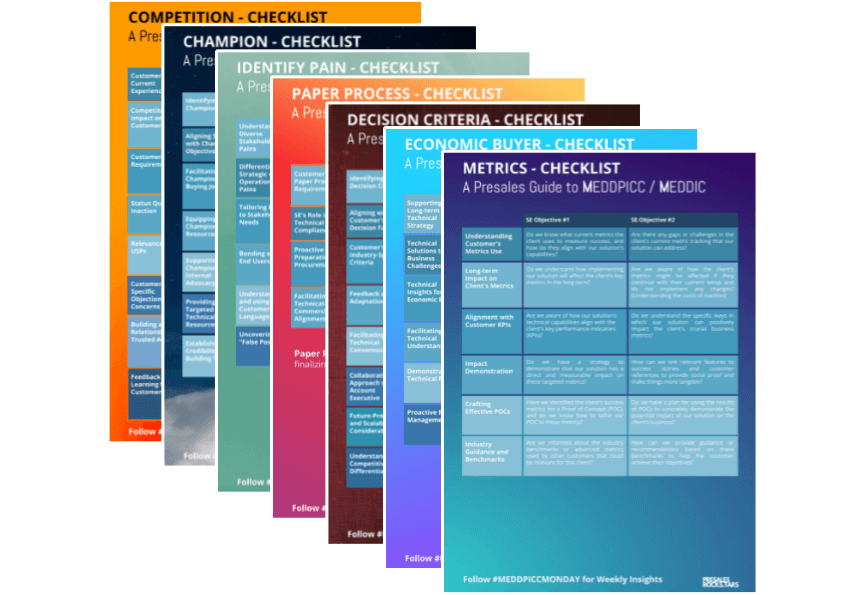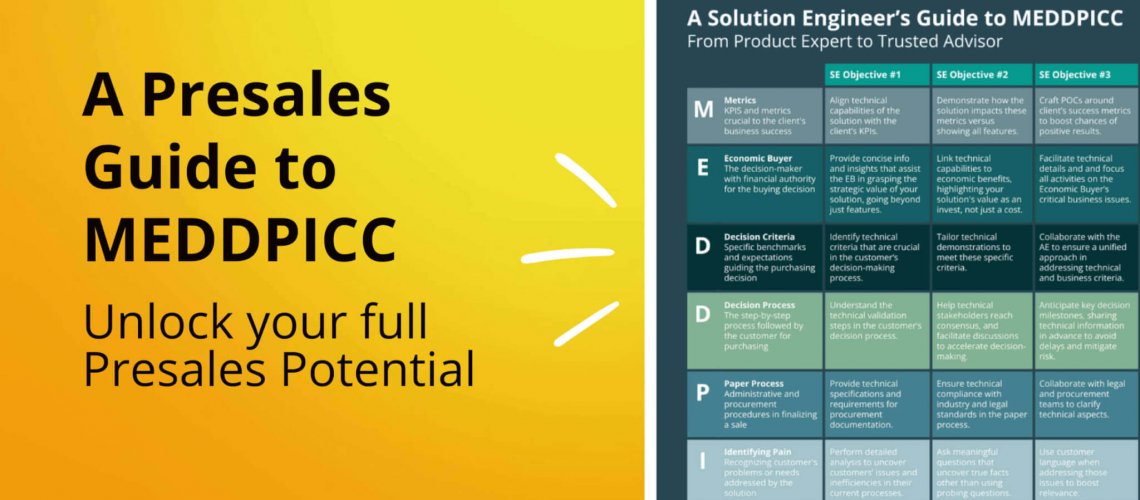

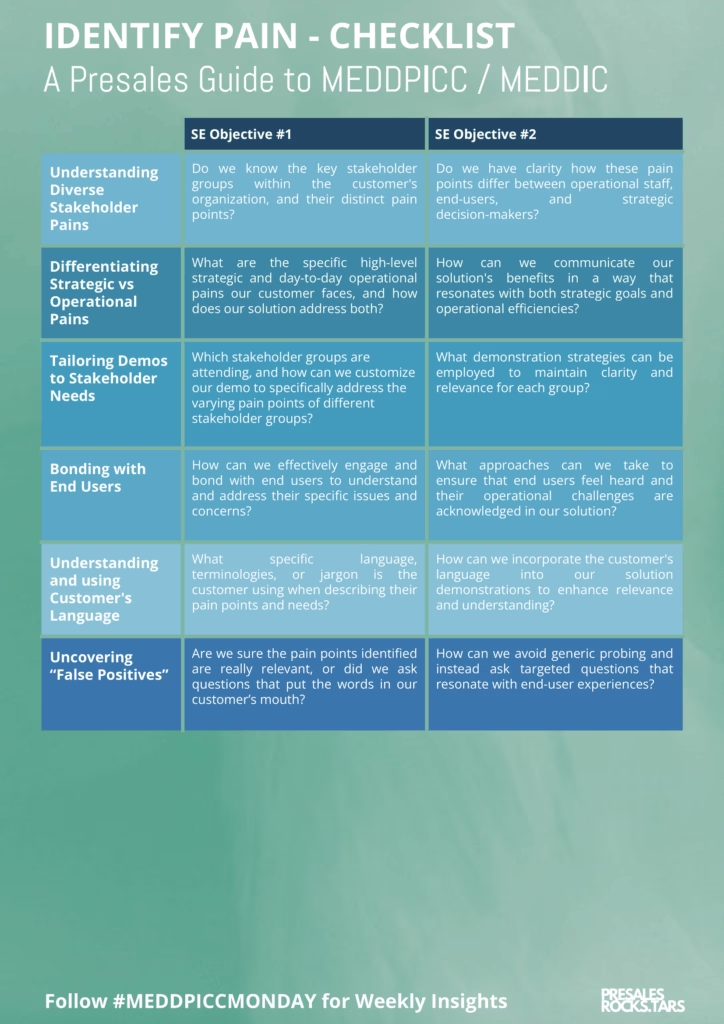
MEDDPICC (or MEDDIC / MEDDPIC) is a popular framework in sales. It helps teams qualify deals by looking at Metrics, the Economic Buyer, Decision Criteria, the Decision Process, Pain, Champions, Compelling Events, and Competition. The goal is simple: avoid surprises and spot risks early.
But MEDDPICC is not only useful for sales. It is a strong tool for Solution Engineers too. SEs combine technical depth with customer insight, which makes them perfect for using MEDDPICC in a more practical and customer-facing way.
Instead of treating MEDDPICC as an internal checklist, SEs can use it to shape better customer conversations. It helps them link product capabilities to real customer goals, explain value in a simple way, and guide buyers through their process. For example, by zooming in on Metrics, an SE can show how the solution moves the needle on what the client cares about most.
Used this way, MEDDPICC helps SEs move from product experts to trusted advisors. It gives structure, clarity, and a shared language for understanding what matters to a customer.
In short, MEDDPICC becomes more than sales qualification. It becomes a practical framework for SEs to build trust, run better meetings, and make their demos and recommendations more relevant.
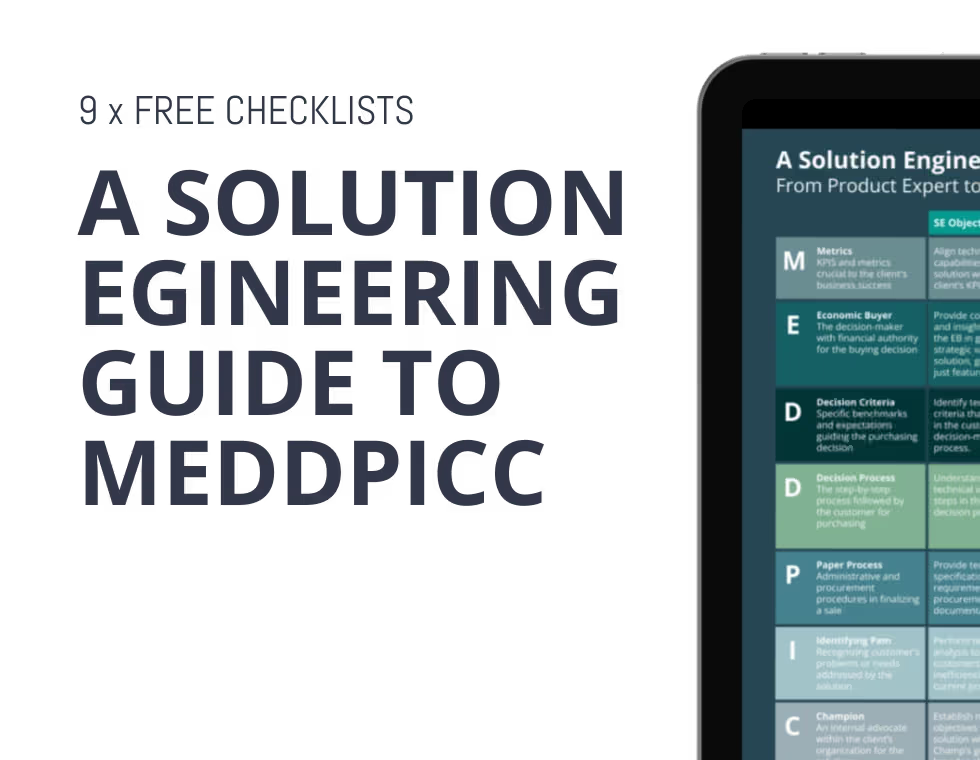
TLDR: How SEs can use MEDDPICC to improve presales performance
MEDDPICC is not only a sales tool. It helps Solution Engineers run better conversations, understand what matters to a customer, and show value faster.
- Align with real needs: SEs can map their solution to the customer’s goals, priorities, and blockers. This moves the discussion from features to real outcomes.
- Stand out in the market: By focusing on each customer’s unique situation, SEs can position their solution in a way that feels tailored and relevant.
- See the full picture: MEDDPICC gives structure. It helps SEs understand the buying process, the decision criteria, the pain points, and the urgency behind the deal.
- Build trust: A clear, customer-focused process makes conversations smoother. It creates trust and improves the overall experience for the buyer.
- Go beyond “the demo”: Used well, MEDDPICC turns SEs into strategic partners, not product explainers. It helps them support the customer long term, not just in one meeting.
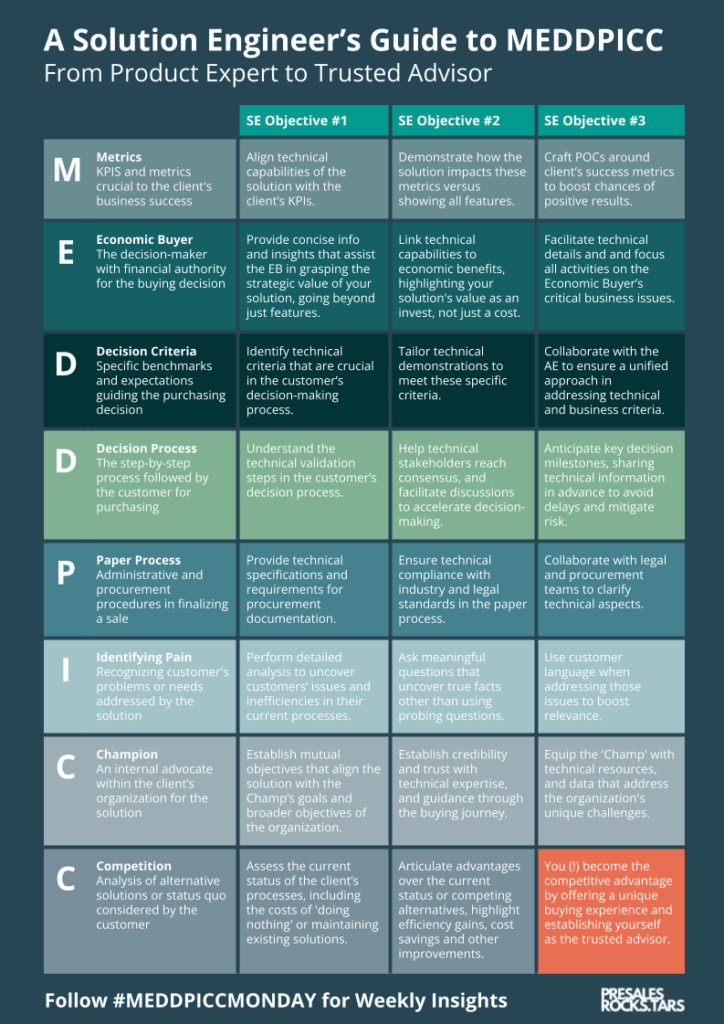
Metrics in the MEDDPICC Method: Customizing Solutions to Fit Customer Objectives
If you look at any good MEDDPICC cheat sheet, Metrics are always the first item, and for Solution Engineers this part is especially important. Metrics represent the numbers the customer cares about and the indicators they use to judge success. When SEs understand these numbers, they can shape their demos and their explanations in a way that speaks directly to what matters most to the customer.
Strong SEs link their solution to the customer’s KPIs by asking simple but meaningful questions. They try to understand what the customer wants to improve, whether it is saving time, reducing cost, increasing output, or making better decisions. Once this is clear, it becomes much easier to show how the solution supports these goals.
This becomes very practical in real situations. If a customer wants better efficiency, the SE can show how relevant workflows become faster. If the customer is planning to scale, the SE can explain how the system grows with the business without creating extra work. If quality is a priority, the SE can demonstrate how the tool reduces errors. In each of these cases, the conversation moves away from features and toward impact, which is where Metrics become powerful.
It is also important to look ahead. Customer priorities shift over time as their market, internal goals, and challenges change. SEs who stay close to their customers can adapt their message accordingly, which keeps the solution relevant and strengthens trust. This also positions the SE as a partner who understands the bigger picture rather than someone who simply shows the product.
In summary, Metrics help SEs connect their solution to real business outcomes. They keep demos focused on what matters to the customer and make the value easy to understand. When SEs use Metrics well within MEDDPICC, their demos become more engaging, their conversations become clearer, and their chances of winning the deal increase noticeably.
Understanding the Economic Buyer in MEDDPICC: How SEs Speak to the Real Decision Maker
In the MEDDPICC cheat sheet, the Economic Buyer is the person who makes the final decision. This is usually someone senior who looks at the business impact of a solution, not the technical details. They care about budgets, company goals, and whether the investment makes sense.
For Solution Engineers, the goal is to show how the solution helps the company reach its goals. This means talking less about how the product works and more about what it changes. If you already captured the customer’s important Metrics, you can use them here. For example, if the customer wants to cut costs or speed up a process, you should explain clearly how your solution supports that.
To do this well, SEs need a basic understanding of the customer’s situation. This includes their industry, current challenges, and what the company is trying to improve. With this context, it is easier to explain why the solution matters and why the timing is important.
Economic Buyers do not need a long technical explanation. They want a simple answer to one question: “How does this help us reach our goals.” If SEs can link the product to the customer’s Metrics in clear language, they make the decision much easier.
In short, when speaking to an Economic Buyer, keep the focus on outcomes, not features. Use the Metrics you already gathered and explain how the solution supports them. This makes the conversation relevant and shows that you understand what the customer is trying to achieve.
Decision Process in MEDDPICC: Making Customer Interaction Smoother
The Decision Process in the MEDDPICC cheat sheet describes how a customer moves from first interest to a final purchase. For Solution Engineers, knowing this process is just as important as knowing the technical needs. It helps you give the right information at the right time.
Every customer has a different way of making decisions. Some need a formal evaluation. Others run internal tests. Some involve many stakeholders. Some move fast, others slow. If SEs understand these steps early, they can plan their conversations and demos to match the customer’s timeline.
At the start of the process, customers often look for a simple overview and clear benefits. Later, when they already understand the basics, they want more detail. This is where SEs can show deeper workflows, integrations, and edge cases. Adjusting the level of detail to the stage makes meetings smoother and avoids overwhelming the customer.
It also helps to think ahead. If you know the customer will worry about integration, security, or change management later in the process, you can prepare examples or materials before these questions come up. This reduces friction and builds trust.
Good SEs guide customers by sharing real examples from similar projects. These stories help customers understand what a successful path looks like and what steps they might need next.
Different companies work in different ways. Some are very structured. Others are informal. SEs who adapt their style to the customer’s culture make it easier for everyone involved to move forward.
In summary, understanding the Decision Process means understanding how your customer makes choices. If you align your meetings, demos, and technical depth with these steps, the whole buying journey becomes easier and more predictable for both sides.
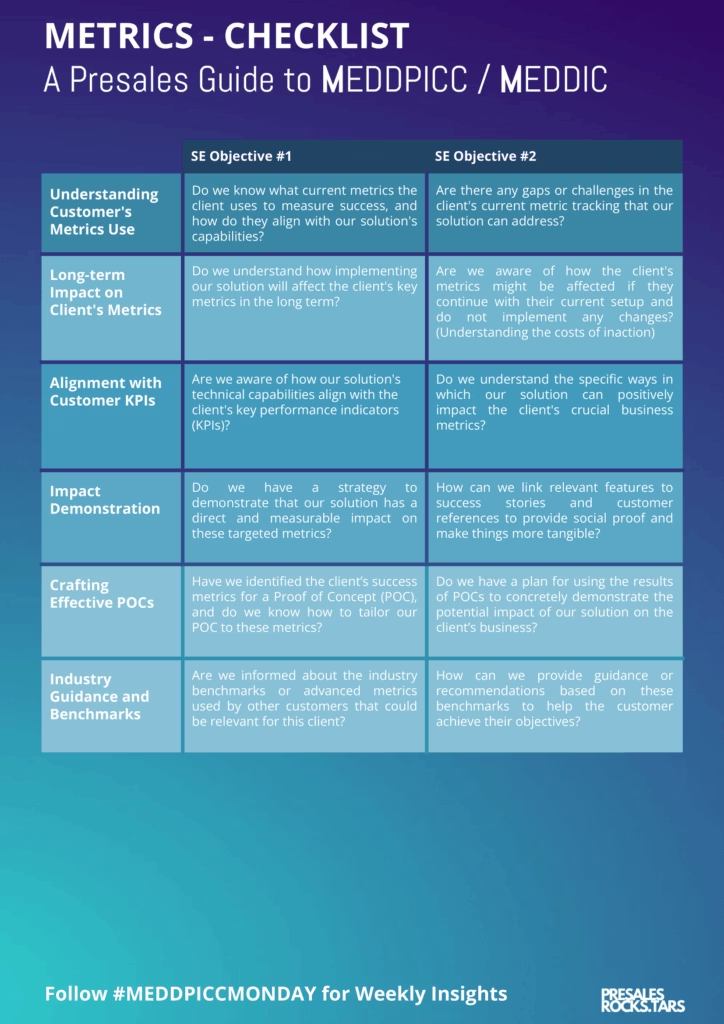
Decision Criteria in MEDDPICC: What Customers Use to Compare Solutions
Every buying team has a set of rules they follow when choosing a solution. These rules are the Decision Criteria. They include topics like technical fit, integration, ease of use, security, price, and how well the solution supports the customer’s business goals.
For Solution Engineers, these criteria are extremely helpful. Once you understand what matters most to the customer, you can shape your demo and your explanation around the things they will actually evaluate. This usually starts with a simple conversation about priorities. SEs and Account Executives should do this together so everyone has the same understanding.
Some criteria are clear and written down. Others show up between the lines. If a customer keeps asking about data access, you can assume security and permissions matter. If they talk about growth or expansion, flexibility and scalability are part of the picture. Good SEs listen carefully and connect these dots.
When you know the criteria, you can design your demo to match them. If integration is important, show it. If ease of use is a concern, focus on simple workflows. If performance matters, highlight speed and stability. This keeps the conversation relevant and avoids overwhelming the customer with topics they do not care about.
Small proofs of concept or tailored demos can make these criteria even easier to evaluate. They help customers see how your solution fits their needs in practice, not just in theory.
In the end, understanding Decision Criteria helps customers compare options with confidence. It also helps SEs build trust because the customer sees that your message matches their priorities and not your product agenda.
Paper Process in MEDDPICC: Making the Final Steps Easy for Everyone
The Paper Process describes everything that needs to happen between “yes, we want this” and the final signature. This includes contracts, security reviews, technical documents, legal checks, and all the internal approvals on the customer side. It is often the slowest part of a deal, which is why SEs can make a real difference here.
For Solution Engineers, the goal is to make these steps predictable and easy. This means providing the right technical information early, helping the customer understand what they need to prepare, and working closely with the Account Executive, legal, security, and procurement teams. Small gaps in documentation or unclear answers often cause delays. SEs can prevent this by preparing the required details before issues appear.
A simple example is security. Many customers need a security review before they can sign. If the SE shares the right documents early, the customer can start this process sooner, which removes friction later. The same applies to integration details, data flows, and compliance questions.
It also helps to understand how the customer’s own approval process works. Some companies need a security sign-off, a data privacy check, a budget approval, and a legal review. Others have only one or two steps. If SEs know this in advance, they can guide the customer and avoid surprises.
In short, the Paper Process is where technical clarity matters. SEs who take this stage seriously reduce delays, build trust, and help deals close faster. By staying one step ahead of the administrative work, they make the buying journey smoother for everyone involved.
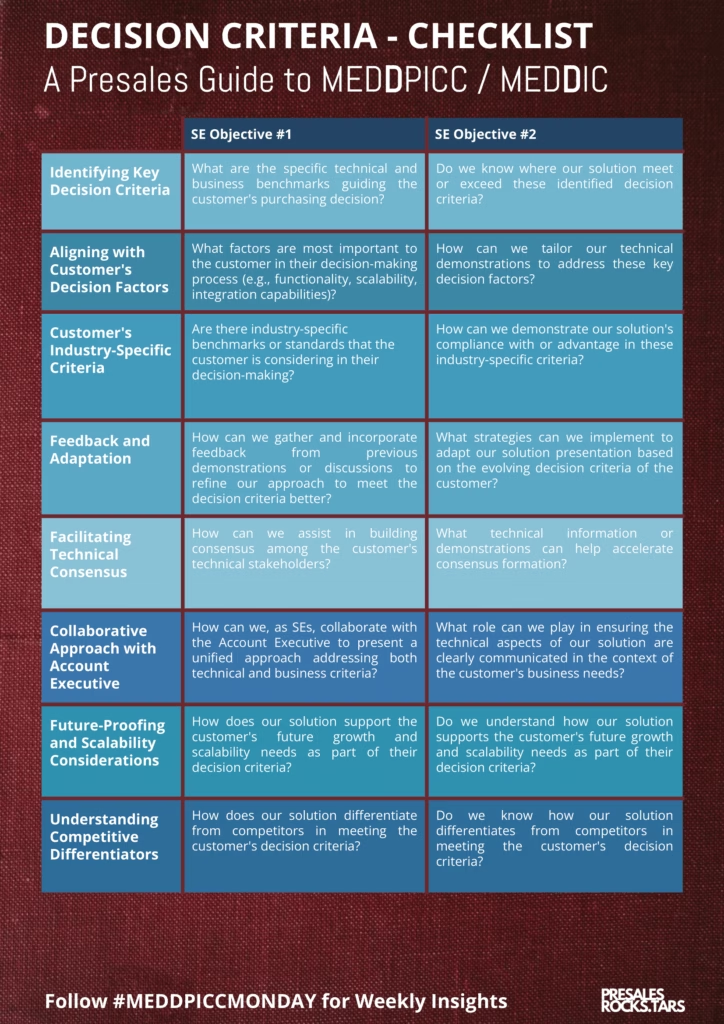
Identify Pain in MEDDPICC: Why change, before going into the how
Identify Pain is one of the most important parts of MEDDPICC for Solution Engineers. It describes the real problems the customer wants to fix. Deals move forward when the customer feels the pain clearly and sees that your solution can remove it.
To find these problems, SEs need to understand how the customer works today. This means asking open questions, listening closely, and going beyond the first answer. Often the first problem a customer mentions is only a symptom. The real issue sits deeper in the process.
For example, if a customer struggles with data management, the SE should look at how the data is collected, stored, and used today. This helps uncover problems that are not obvious at first glance, such as manual work, delays, missing context, or duplicated systems.
Once the pain is clear, SEs should show how their solution removes the problem in a simple and practical way. If the customer has trouble tracking sales activities, the SE can show exactly how their system makes this easier and more reliable.
It is also important to understand pain on two levels. Decision-makers talk about strategic pain like cost, risk, or efficiency. End users talk about daily problems like usability, manual work, or missing workflows. SEs need both views to make a complete case.
When speaking with end users, the conversation should stay practical. They want to know how their work becomes easier tomorrow, not what the five-year vision looks like. Helping them with real day-to-day issues builds trust and gives SEs valuable insight for the wider buying team.
In short, identifying pain means understanding what slows the customer down today and what they want to change. SEs who are good at this create more relevant demos, tell stronger stories, and help customers make decisions faster. It also strengthens the relationship because the customer feels understood, not sold to.
Champion in MEDDPICC: How to Find and Support the Person Who Drives Your Deal
A Champion is someone inside the customer’s organisation who believes in your solution and actively supports it. They understand the value, they talk about it internally, and they help you reach the people who matter. For Solution Engineers, having a strong Champion is often the most reliable way to keep a deal moving.
What Makes a Strong Champion
A strong Champion has two things: personal motivation and real influence.
Motivation:
They care about the project because it solves a real problem for them or their team. They might gain time, reduce manual work, improve their visibility, or unlock a win they have been pushing for internally. They see clear value in your solution and understand what happens if nothing changes.Influence:
They know how decisions are made in their company and have access to the people involved. Other colleagues respect them. They can open doors, bring the right stakeholders into meetings, and explain the business problem in a clear way. When something needs to move forward, they can make it happen.
A strong Champion also communicates well. They can explain the pain, describe the business impact, and translate your message so it fits their company’s goals and KPIs. They do not avoid difficult conversations around budget, blockers, or internal resistance.
How SEs Build and Support a Champion
Once you identify a possible Champion, your goal is to become a trusted partner for them. This starts with understanding their goals and giving them simple, reusable messages they can take into internal discussions.
Good Champions need practical support. SEs can help by:
- providing short summaries they can share internally
- giving them clear talking points about the pain, value, and impact
- sharing success stories they can reuse
- preparing them before big internal meetings
- helping them handle typical objections from other teams
Champions often face pressure inside their organisation. When things get political or messy, they need someone who guides them, not someone who only shares product details. This is where SEs can make a big difference by staying close, thinking ahead, and flagging potential roadblocks early.
Helping Champions Navigate the Buying Process
Many Champions have never bought complex software before. They may not know when to involve legal, security, or privacy teams. They may be unaware of steps like data protection reviews or checks from the workers’ council, especially when employee data is involved.
SEs can help by:
- explaining the process early
- preparing technical and security documents ahead of time
- guiding them through internal approval steps
- helping them coordinate all stakeholders smoothly
Supporting them through this part of the process builds trust and prevents delays that usually appear late in the deal.
Why Champions Matter
A good Champion pushes the project forward, aligns internal stakeholders, and helps you understand what really happens inside the organisation. They also help you avoid surprises, because they tell you honestly what people think and what might block the deal.
When SEs support their Champions well, both sides work toward the same goal. The deal becomes easier to navigate, decisions happen faster, and the customer feels supported instead of pressured. In the end, Champions turn complex buying processes into clear paths — and SEs play a major role in helping them succeed.
Compelling Event in MEDDPICC: Why do your customers need to change NOW?!
A Compelling Event is the reason a customer needs to act within a specific timeframe. It is not the expected close date. It is the moment when something real happens inside the customer’s organisation that forces a decision. For Solution Engineers, understanding this moment is key because it shapes urgency, timelines, and priorities.
Compelling Events can come from many places.
Examples include new regulations, contract renewals, software reaching end of life, internal deadlines, upcoming audits, budget cycles, or major changes inside the company. These events put pressure on the customer to solve their problem on time.
When SEs understand the Compelling Event, they can position the solution in a much stronger way. Instead of talking about features, they can show how the solution helps the customer meet a deadline, avoid a risk, or prepare for a change. This makes the solution far more relevant.
For example, if a new security regulation becomes active next quarter, the SE can show how the product helps the customer meet all required standards before the deadline. The solution becomes a necessary step, not just a nice option. If a company is preparing for a large expansion, the SE can explain how the platform supports higher volume, new teams, or new regions without breaking processes.
SEs should also understand that Compelling Events are about the customer’s reality, not the seller’s goals. The customer may need the solution live before a certain date, even if the sales team expects the deal to close earlier or later. Having this clarity helps SEs plan demos, proofs of concept, technical reviews, and all the steps that need to happen before the Compelling Event.
In summary, a Compelling Event explains why the customer cannot wait. When SEs align their message and their process to this timing, they make the buying journey easier and create a stronger case for action. It also helps the customer see the real cost of doing nothing and why the solution matters now, not someday.
Competition in MEDDPICC: Standing Out Against Rivals and the Status Quo
In MEDDPICC, Competition is not limited to other vendors. It also includes the customer’s current tools, old processes, and their natural hesitation to change anything that already works “well enough.” Many deals are lost not to competitors but to the status quo, which makes this part especially important for Solution Engineers.
To handle competition well, SEs first need a clear picture of what they are competing against. This means understanding which alternatives the customer is evaluating, what their current setup looks like, and why they might prefer to keep things as they are. Sometimes the biggest obstacle is a spreadsheet the team has used for years. Sometimes it is an internal system that everyone knows is outdated but nobody wants to replace because it feels risky.
A strong SE does not spend time speaking negatively about competitors. Instead, they focus on understanding the customer’s world. Once the real needs and problems are clear, the SE can show how their solution fits better. This is not about listing features; it is about explaining why certain capabilities matter for the customer’s specific situation.
Competing against the status quo requires the same type of thinking. People avoid change when the benefit is unclear or when they expect the change to disrupt their work. SEs can help by showing what the customer loses by staying with their current system. Sometimes this loss shows up as slow processes, manual work, missed insights, or tools that cannot scale with the business. When SEs explain these points in simple, practical terms, customers see why a change is necessary.
The most convincing way to stand out is to make the impact tangible. Real examples, short stories, and focused demos help customers understand what will improve and how it will affect their daily work. When customers see the practical benefits clearly, the comparison becomes much easier for them.
In the end, handling competition well is less about arguing against others and more about showing relevance. SEs who understand the customer’s situation, explain the value in a clear way, and highlight the risks of doing nothing become trusted advisors. This makes the buying decision simpler, even in crowded markets, because the customer sees why the proposed solution is the better fit for their needs right now and in the future.
Final Reflections on MEDDPICC: Enhancing the Impact of Solution Engineers
MEDDPICC is often seen as a sales qualification tool, but for Solution Engineers it can be much more. When SEs use MEDDPICC properly, it becomes a framework that helps them understand customers better, run stronger conversations, and make their demos more relevant.
Instead of focusing only on features, SEs can use MEDDPICC to link their product to what the customer actually cares about. They get a clearer picture of the customer’s goals, pain points, decision process, and internal challenges. This allows them to shape their message in a way that fits the customer’s reality, not the product’s structure.
The biggest shift is that SEs move from “showing the product” to guiding the customer. They help the customer see the impact of solving the problem, the risks of waiting, and the path to a successful rollout. This makes SEs valuable partners in the buying process, not just technical presenters.
MEDDPICC also helps SEs stand out in competitive situations. By understanding what the customer needs, what blocks them, and what matters most inside their organisation, SEs can position their solution in a way that is specific and meaningful. Competitors may talk about features; SEs who use MEDDPICC talk about outcomes.
In the end, MEDDPICC helps SEs build stronger relationships because customers feel understood. They see an SE who listens, asks the right questions, and adapts the solution to their situation. This leads to better conversations, smoother evaluations, and more confident decisions.
Using MEDDPICC is not about following a checklist. It is about adopting a mindset: focus on the customer, understand their world, and guide them step by step. This approach makes SEs more effective, more trusted, and more connected to real customer success.