

Marketing teams invest loads of time and money generating demo requests, constantly testing, and improving. They tweak the “Book a Demo” button, adjust CTA colors, and A/B test every detail.
Why? Because when you invest that much, you’ve got to know what works.
But when presales takes over to deliver the actual demo…well, let’s just say the approach is often outdated.
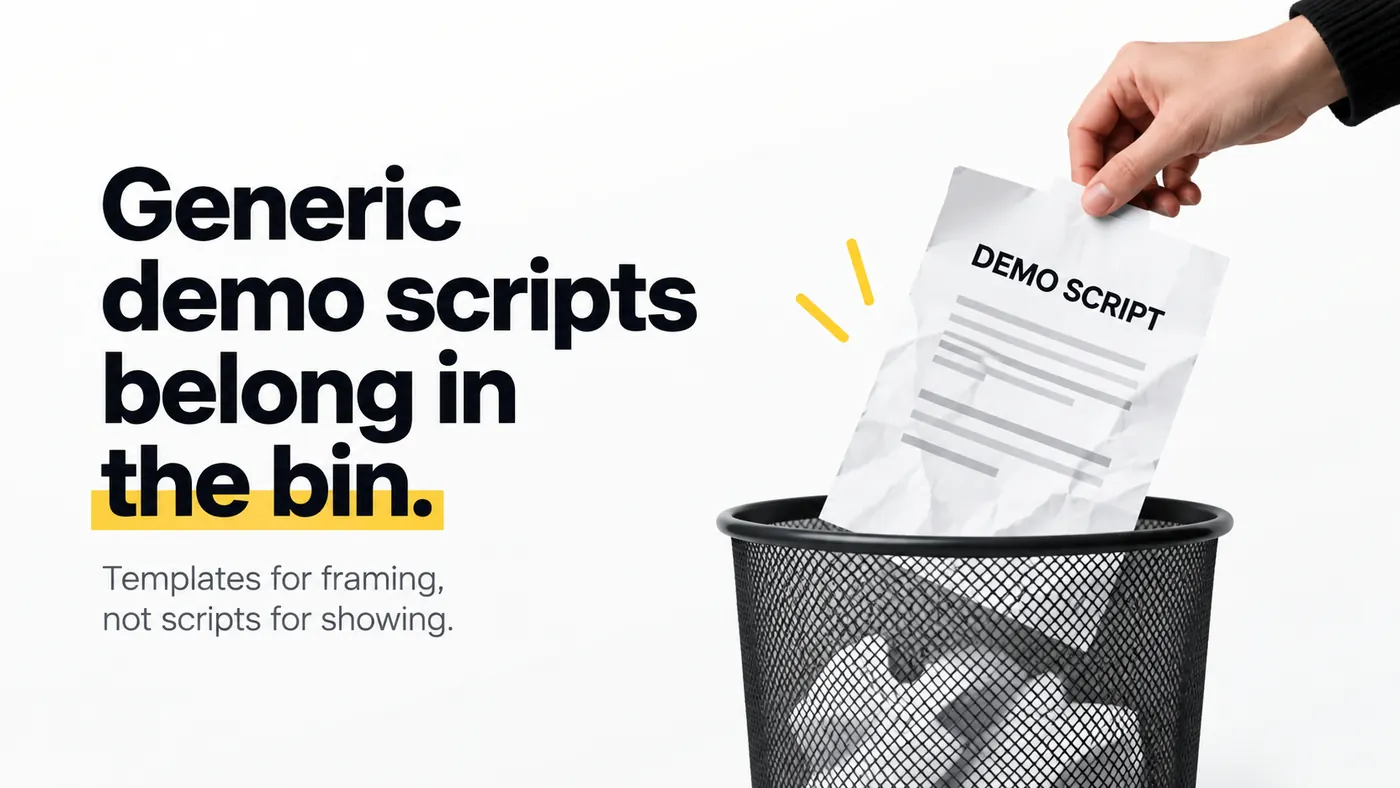
Feature-heavy presentations. Long monologues. Demo scripts that seem frozen in time.
And then, there’s always an excuse:
“𝘞𝘦’𝘳𝘦 𝘥𝘪𝘧𝘧𝘦𝘳𝘦𝘯𝘵 𝘧𝘳𝘰𝘮 𝘰𝘵𝘩𝘦𝘳 𝘤𝘰𝘮𝘱𝘢𝘯𝘪𝘦𝘴; 𝘸𝘩𝘢𝘵 𝘸𝘰𝘳𝘬𝘴 𝘧𝘰𝘳 𝘵𝘩𝘦𝘮 𝘸𝘰𝘯’𝘵 𝘸𝘰𝘳𝘬 𝘧𝘰𝘳 𝘶𝘴.”
Honestly? You’re fooling yourself.
Prospects want the same thing: clarity, engagement, and solutions to their actual problems.
Here’s the good news—improving demo performance doesn’t have to be complicated.
You don’t need a strategy overhaul or endless discussions. You can start now with immediate feedback from your next demo.
Try something new, see how it lands, and adjust—just like marketing does.
Because a well-done demo isn’t just a meeting; it’s an experience that builds trust, addresses real issues, and moves deals forward.
𝗜𝘁’𝘀 𝘁𝗶𝗺𝗲 𝗽𝗿𝗲𝘀𝗮𝗹𝗲𝘀 𝗮𝗱𝗼𝗽𝘁 𝘁𝗵𝗲 𝗺𝗮𝗿𝗸𝗲𝘁𝗶𝗻𝗴 𝗺𝗶𝗻𝗱𝘀𝗲𝘁:
𝗥𝘂𝗻 𝗲𝘅𝗽𝗲𝗿𝗶𝗺𝗲𝗻𝘁𝘀, 𝗺𝗲𝗮𝘀𝘂𝗿𝗲 𝗿𝗲𝘀𝘂𝗹𝘁𝘀, 𝗮𝗻𝗱 𝗸𝗲𝗲𝗽 𝗶𝗺𝗽𝗿𝗼𝘃𝗶𝗻𝗴.