

End-to-end process matters
Buyers think in order-to-cash, procure-to-pay and record-to-report, not isolated screens.
ERP demos cross departments, processes and countries. Finance, procurement, operations, warehouse teams and IT may all care about the same transaction for different reasons, while migration, permissions and local rules can be just as important as the screen itself.

ERP buying is cross-functional. A workflow that looks good for one department can create extra work, risk or data problems somewhere else.
Buyers think in order-to-cash, procure-to-pay and record-to-report, not isolated screens.
Customers, suppliers, products, prices, entities and charts of accounts need clear ownership and consistent data.
Tax, accounting, invoicing, legal entities and country-specific processes can change how the same workflow must work.
Existing ERP data, surrounding systems and custom processes cannot simply disappear on go-live day.
DemoRamp is a complete toolkit built around three areas with ongoing guidance and coaching for long-lasting, behavioral and organisational change.
Improve your teams communication, presentation and soft skills.
Build repeatable processes and clear rules around demos.
Practical, ready-to-use tools your team can apply in their very next demo.
Where ERP demos usually go wrong. Here are the patterns that come up again and again.
Showing one department’s happy path without showing what happens before and after it in the full business process.
Buyers know that duplicate suppliers, old material numbers and inconsistent account structures are part of the real migration.
Real ERP work includes blocked invoices, credit limits, missing data, manual review and different approval levels.
A process that works in one country may need different tax, document or legal handling somewhere else.
Saying “that can be configured” every time the buyer asks about an existing workflow, integration or custom rule.
Not every workflow deserves equal time. These are the things that matter most to ERP software buyers.
Show one complete business process across roles and departments, not five unrelated screens.
Show approvals, exceptions and hand-offs, including what happens when the process does not follow the happy path.
Show which data objects move, who owns them and how bad data is handled.
Show role-based access and local rules in the places where they change the process.
Show the systems around the ERP, the direction of the data flow and what happens when an integration fails.
Start wherever makes sense for your team’s maturity level. You don’t have to decide everything now. We can always expand later.
How good are our demos?
FreeLet’s start by reviewing a handful of your recorded demos, to see how you’re doing and where you need the most support.
See Demo ReviewHow can we see results from the very next demo?
Quick winQuick tips and better habits your team can use in the very next demo.
See Skills WorkshopHow do we make sure that everyone follows the same best practices?
RecommendedA full training and coaching program with guaranteed results, and your sales team involved.
See 90-Day AcceleratorAlso on its own: ENGAGED™ Demo WorkshopDemo Feedback ServiceOnline Demo CoursesCompare the options
Functional experts often know every exception in the current process and will test posting logic, tax rules, fields and configuration. If you follow every edge case immediately, the end-to-end business problem gets lost.
“The demos that win are the ones that make the buyer’s real problem obvious first, and only then go deep into the detail.”Max LüpertzFounder, Presales Rockstars
Cheat sheets, checklists and guides to apply in your very next demo.
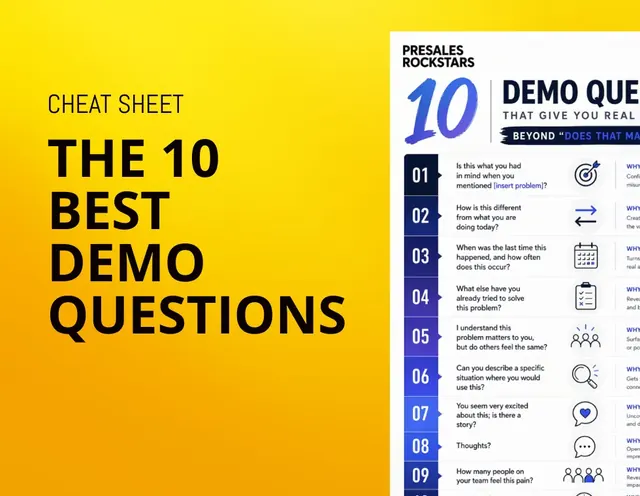 PDF · 1.3 MB
Meaningful and engaging demo questions beyond "Does that make sense?"
Download PDF · 1.2 MB
The most common objections and how to handle them
Download PDF · 246 KB
Detailed list of what questions (not) to ask during your demo
Download PDF · 1.7 MB
5 ready to implement steps that will improve your demo and demo process right away
Download![[Mini Ebook] How to gain your customers trust](/images/resources/resource-5.webp) PDF · 1.7 MB
PDF · 1.7 MBHow to build real trust with your clients by taking a genuine interest in their unknown challenges
Download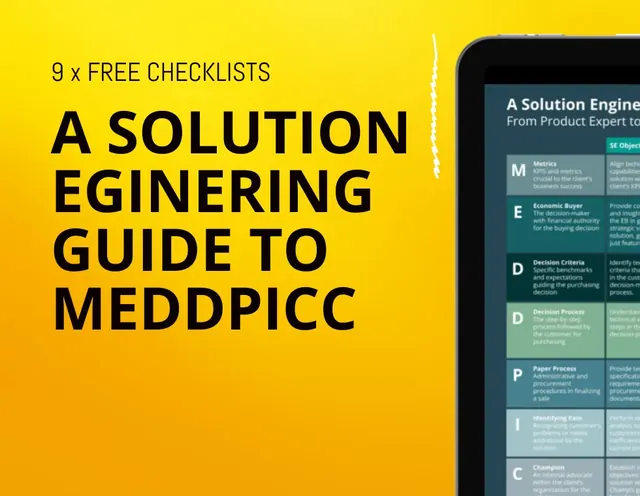 PDF · 1.9 MB
Everything you need to know about MEDDPICC as a Solution Engineer
Download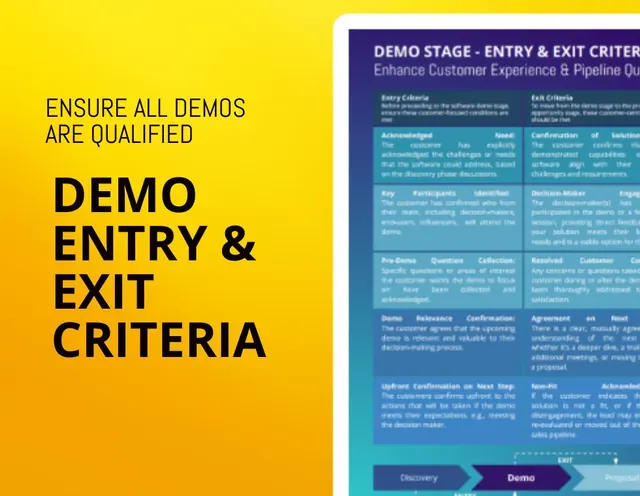 PDF · 126 KB
How to make sure that every demo request you and your team receives is properly qualified
Download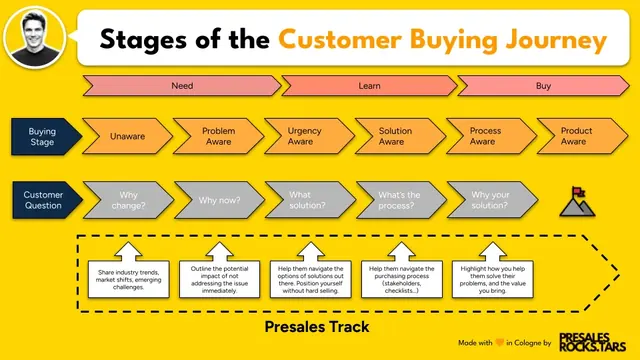 PNG · 102 KB
Understand your customers buying journey and what kind of input they need from you at every stage
Download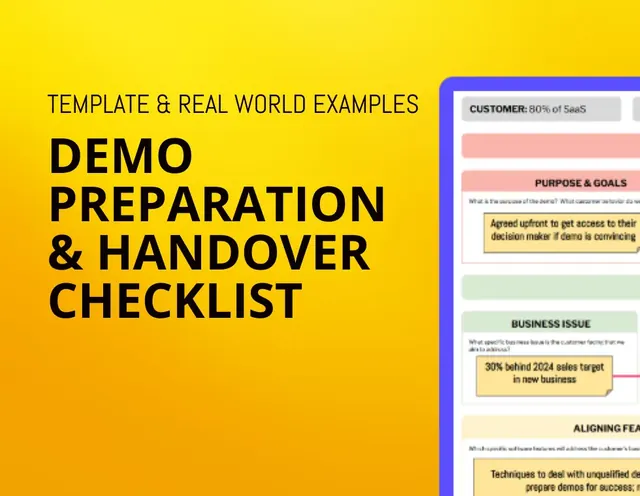 PDF · 657 KB
How to better align internally on your demo objectives and narrative to make every demo count
Download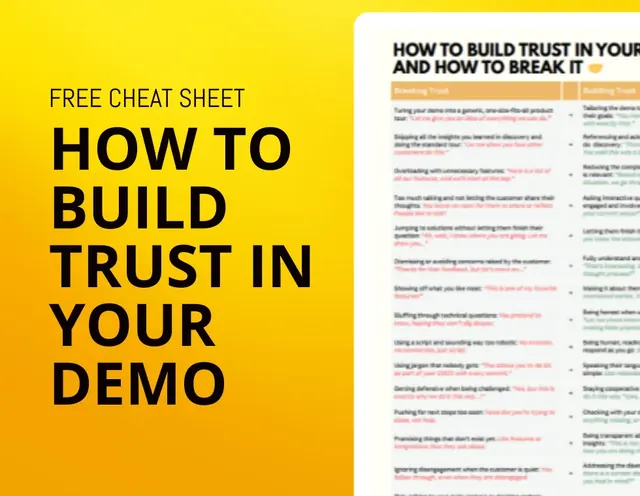 PDF · 118 KB
Behaviours that make your customers trust you; or break it.
Download